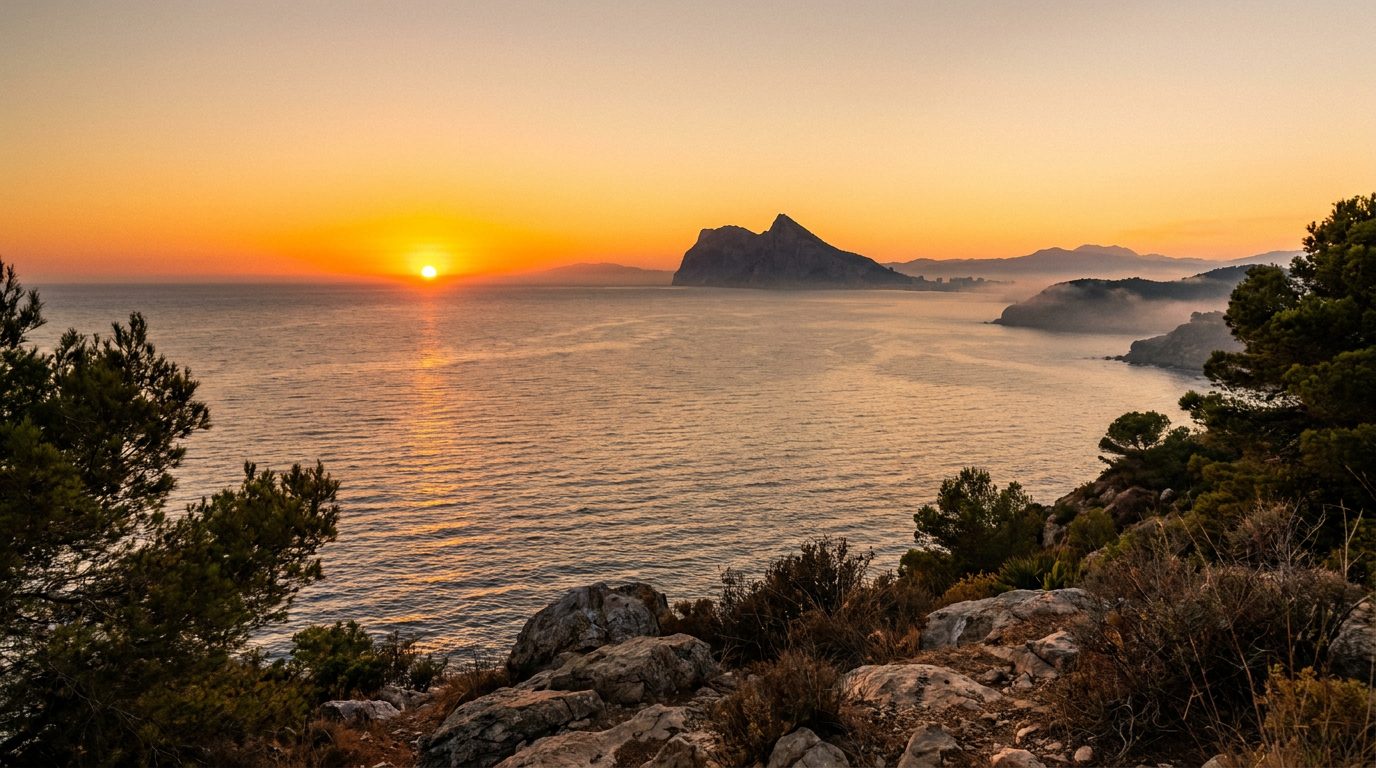
Life, Measured in Sunlight
Over 320 days of sun a year, more than 150 kilometres of Mediterranean coast, and a rhythm of living that turns an ordinary Tuesday into something worth remembering. This is what daily life on the Costa del Sol actually feels like.
A place people visit once — and quietly start planning to stay
The Costa del Sol is often photographed and rarely explained. Beyond the postcards is a coast where mornings start with sea air and good coffee, school runs pass orange trees, and the working day can end with nine holes or a swim.
It is one of the few places in Europe where an international life feels effortless: direct flights across the continent from Málaga, schooling in several languages, healthcare of genuine quality, and a community drawn from more than a hundred nationalities. The infrastructure is modern; the pace, deliberately, is not.
At SOBE Invest we have spent more than twelve years helping families and private buyers settle here. This page is our honest portrait of the lifestyle itself — the part of the decision that no floor plan can show. When you are ready for the practical side, our buying guide covers the rest.
The numbers behind the feeling
The Sea
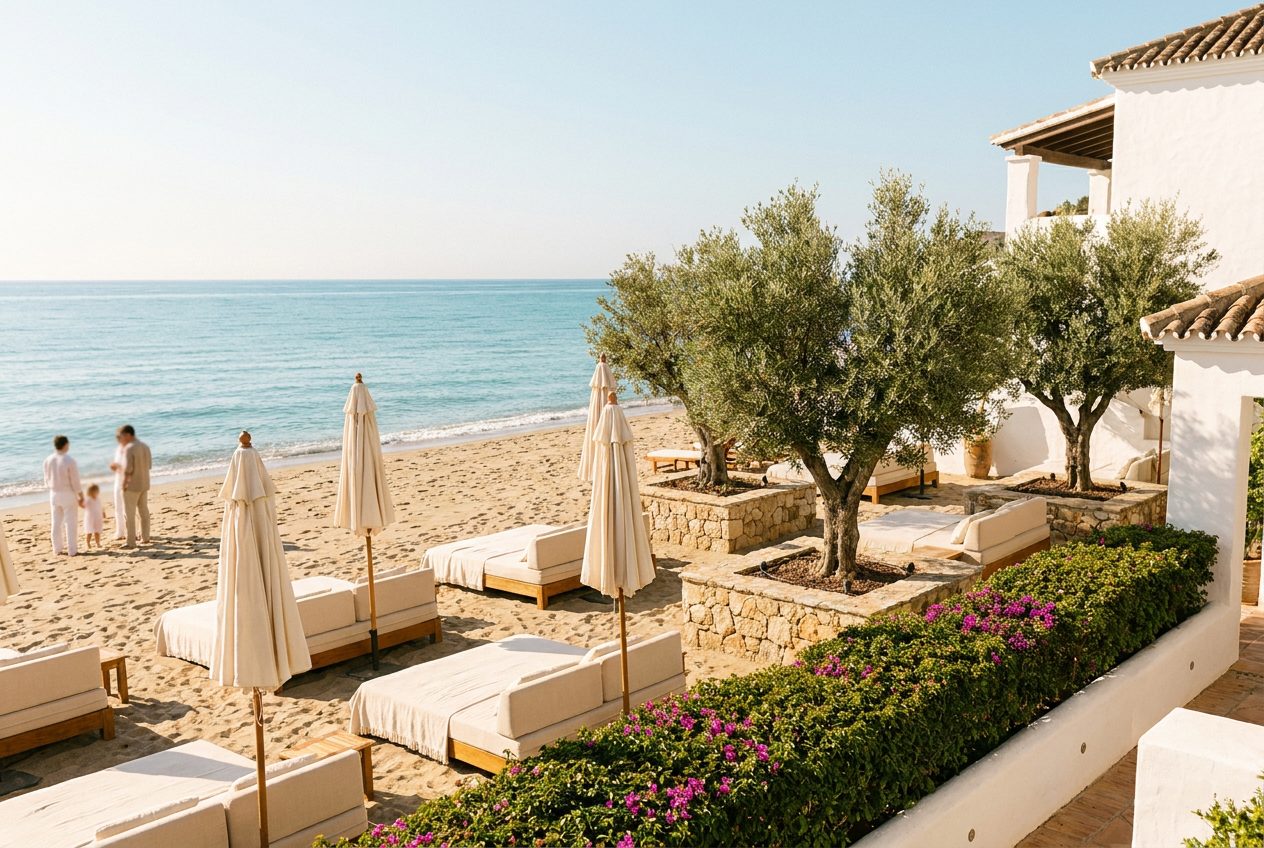
The beach here is not a holiday event; it is part of the weekly routine. Beach clubs from Marbella to Estepona serve long lunches a few steps from the water, paddleboards go out before breakfast, and in winter the promenades belong to runners and dog walkers.
Each stretch of coast has its own character — lively near Puerto Banús, family-calm in San Pedro, wilder and quieter towards Cabopino's dunes.
The Green
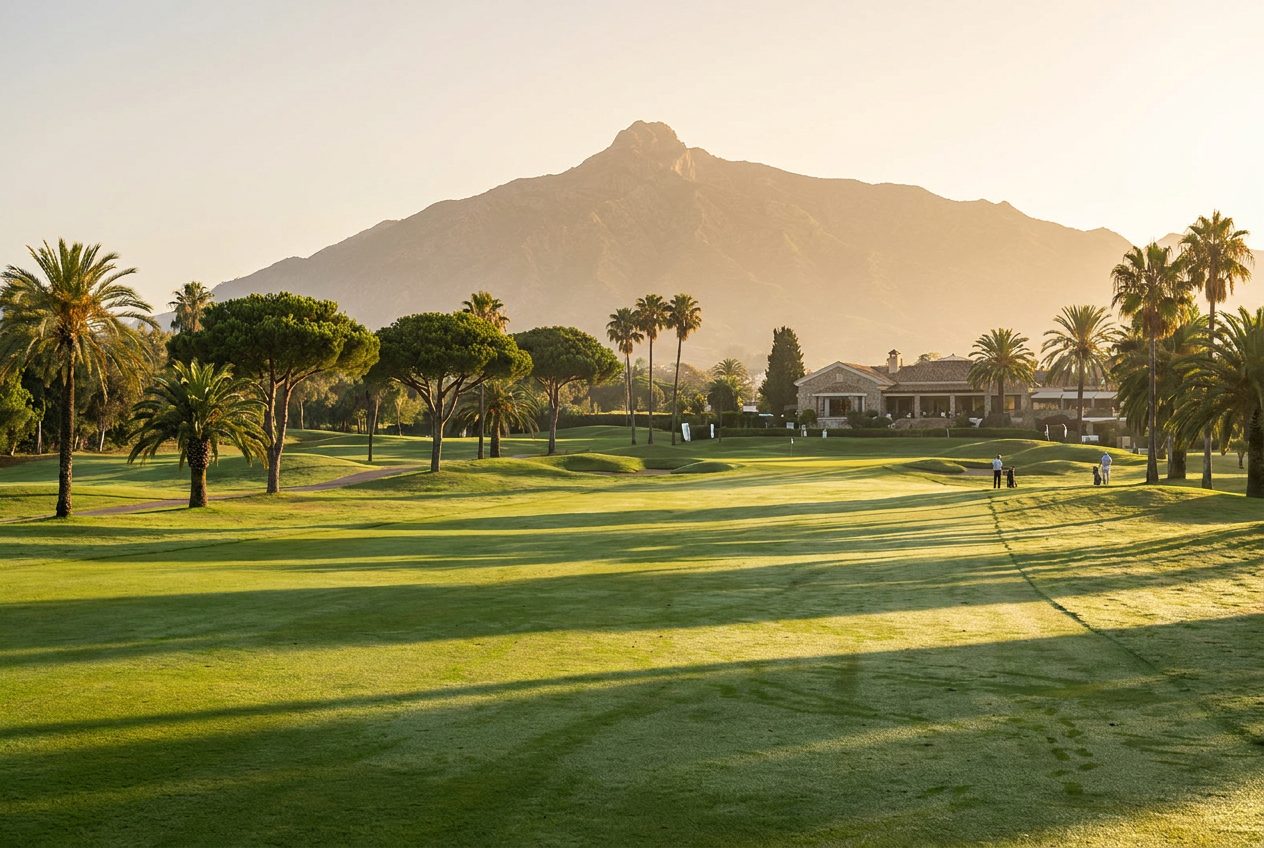
They call it the Costa del Golf for a reason: more than seventy courses within an hour's drive, from the storied fairways of Sotogrande to the amphitheatre of Nueva Andalucía's Golf Valley, where La Concha watches over every tee.
Golf here shapes neighbourhoods, friendships, and calendars. Many owners play year-round — a January round in shirtsleeves is a small pleasure that never gets old.
The Table
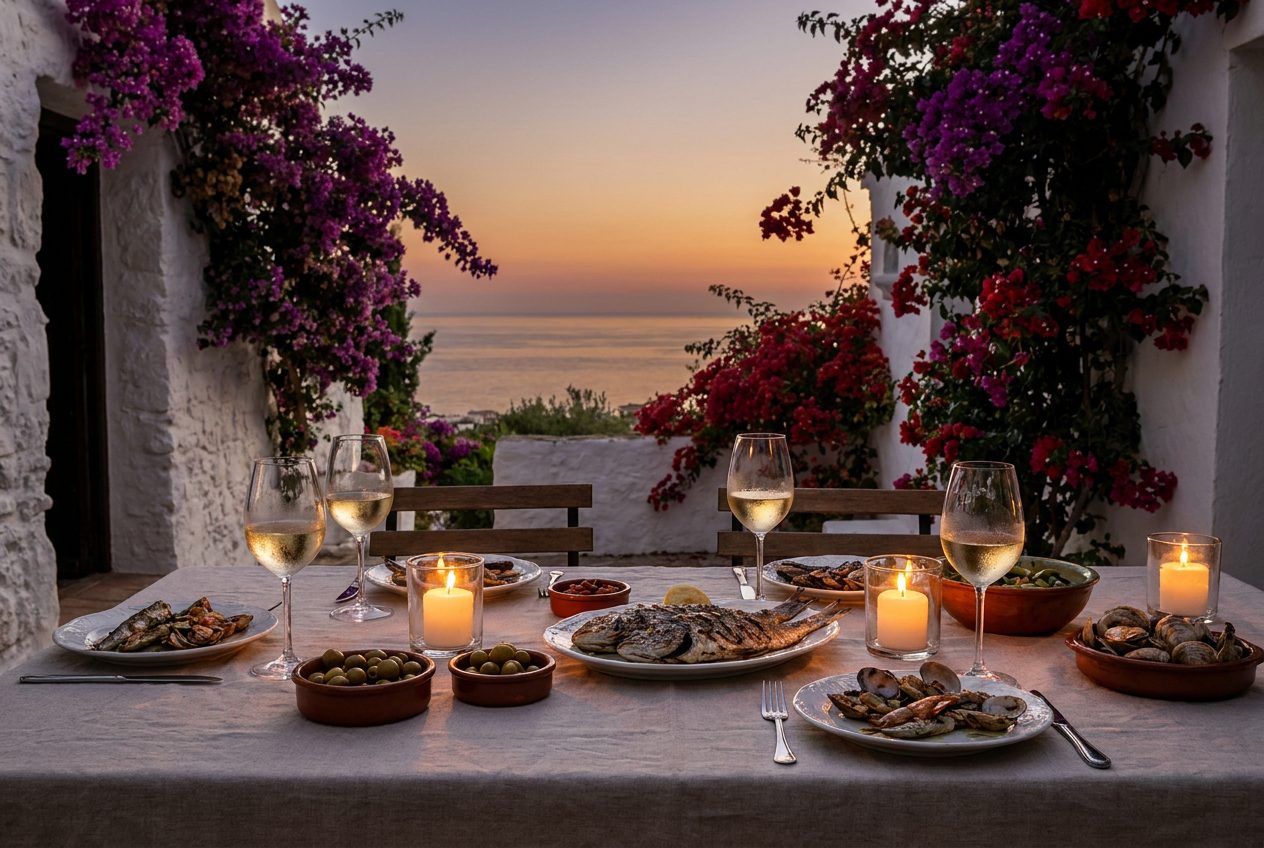
Food is the coast's second language. Chiringuitos grill sardines on driftwood fires the way they have for a century, while Marbella now holds four Michelin-starred restaurants alongside them without any sense of contradiction — two-star Skina in the old town, plus Messina, Nintai and Back.
Markets in San Pedro and Estepona fill with Andalusian produce every morning; dinner starts late, lingers long, and is almost always outdoors.
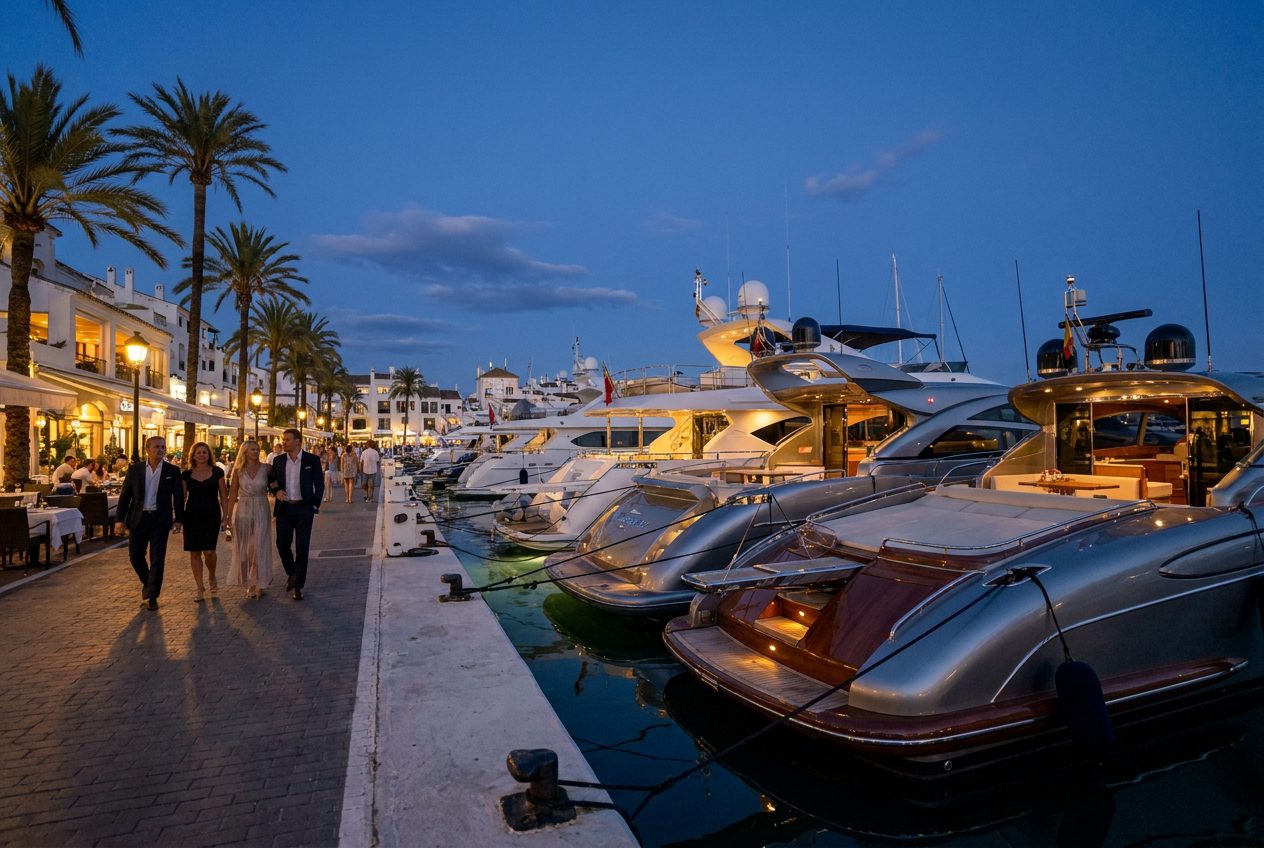
The Marina
Evenings gravitate to the water. Puerto Banús remains the coast's most famous address for a stroll past the yachts, while Estepona's port and Sotogrande's marina offer the same ritual at a gentler volume.
Boutiques, galleries and terraces stay open late; the people-watching is, and always has been, complimentary.
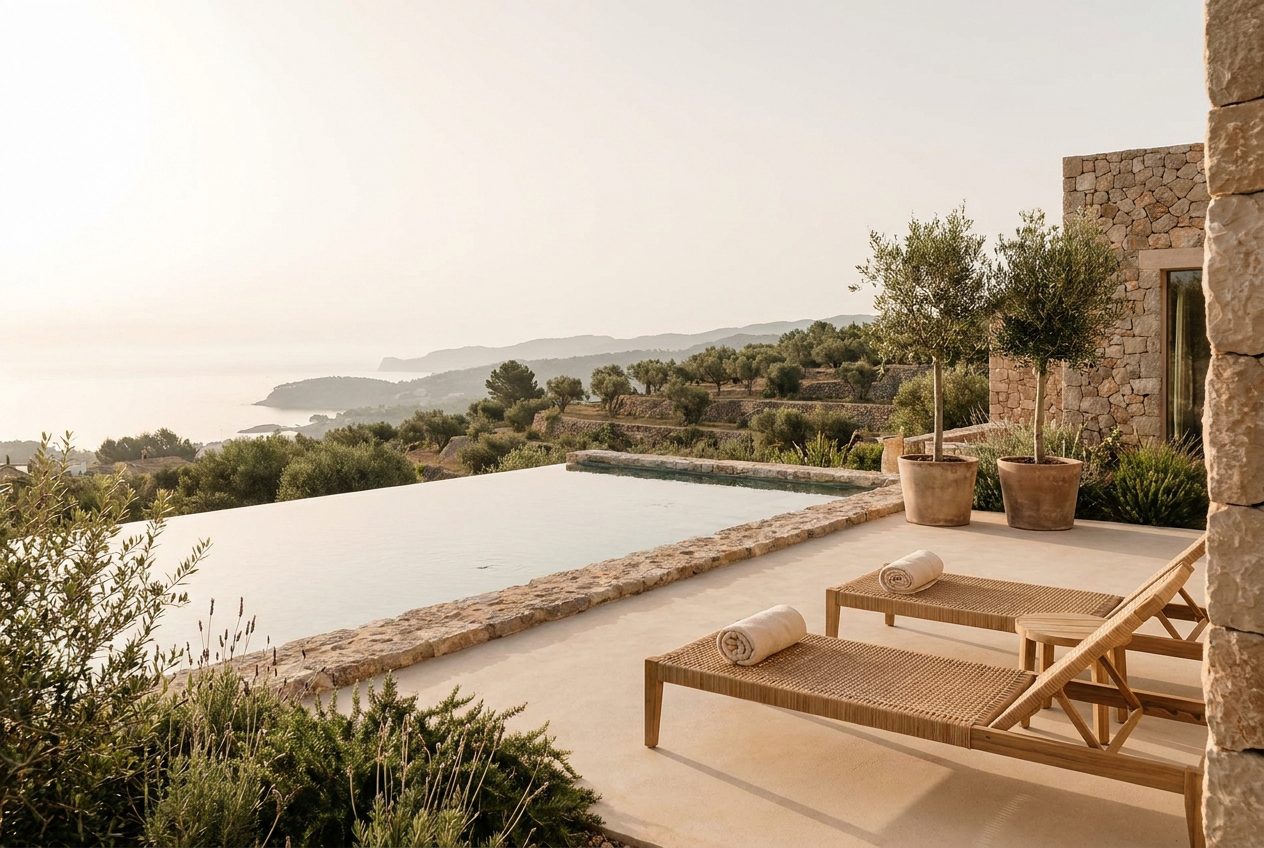
The Quiet Hours
Behind the social coast is a private one. Hillside mornings above Marbella begin in silence — a swim, the mountains, the sea in soft focus. Wellness is woven into daily life here: hiking La Concha at dawn, yoga on the sand, spa culture that runs deep in Andalusian tradition.
Many of our clients come for the energy and stay for the calm. The coast is generous enough to offer both, often in the same day.
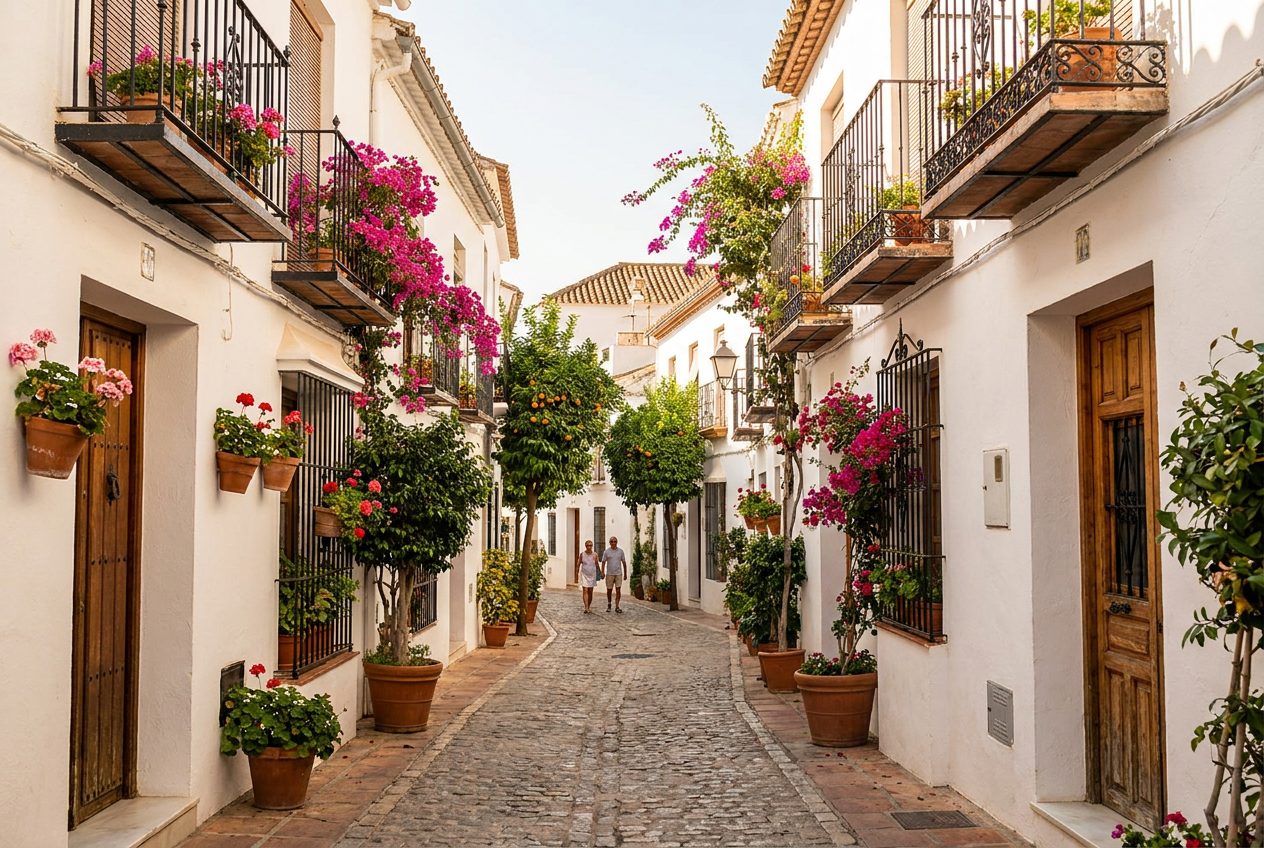
The Old Town
Marbella's Casco Antiguo is a reminder that this coast had a soul long before it had a reputation. Whitewashed lanes, orange trees, wrought-iron balconies and small squares where the same families have kept shops for generations.
Beyond it lie the white villages — Benahavís, Mijas, Casares — where lunch takes three hours and nobody minds. Andalusian culture is not a museum here; it is the neighbourhood.
Three games that shape the coast
Sport here is not an amenity listed in a brochure — it is how the coast socialises, does business and raises its children. Three games in particular define the rhythm.
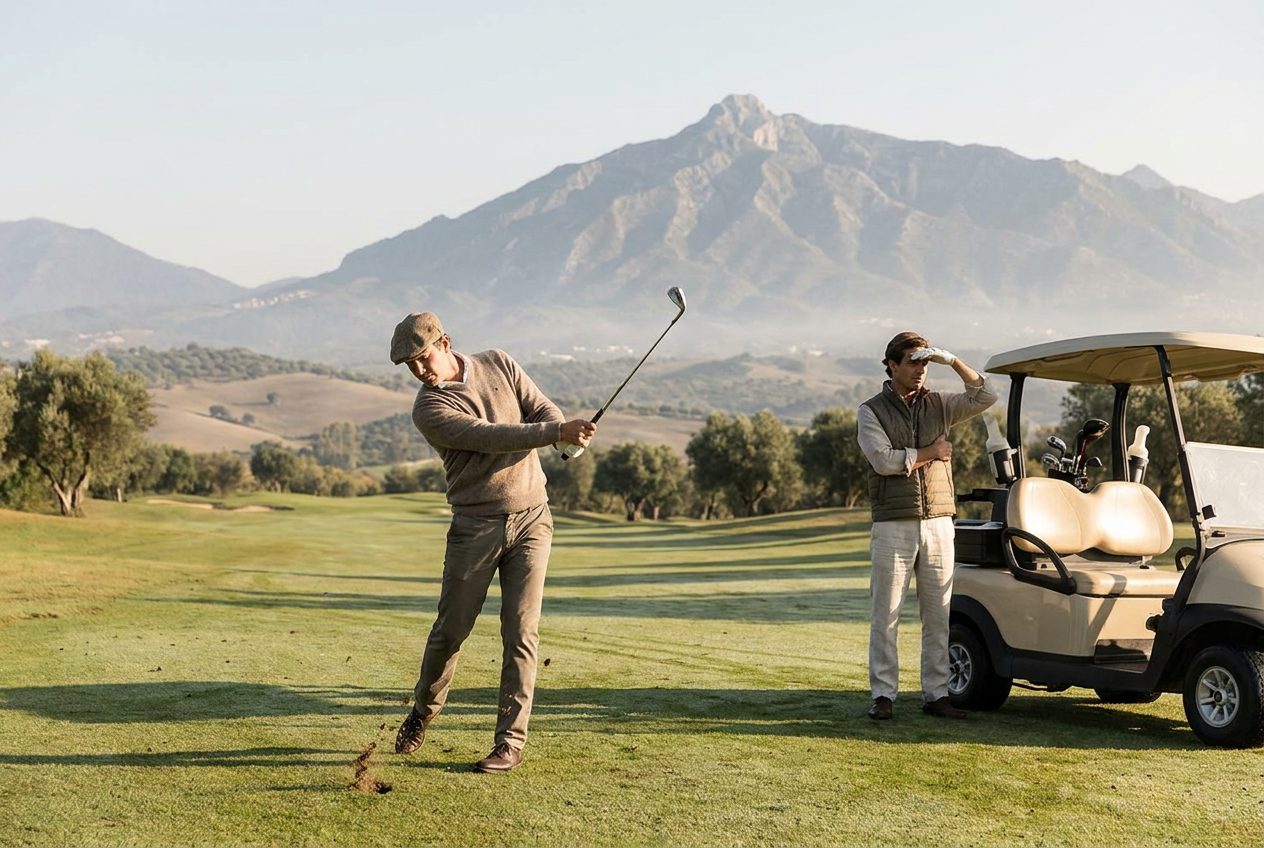
Golf
- 70+ courses within an hour's drive — Europe's densest golfing coast
- 20 courses around Marbella alone, anchored by Nueva Andalucía's Golf Valley
- 1997 Valderrama hosted the Ryder Cup — the first ever played in continental Europe
- 2023 Finca Cortesín staged the Solheim Cup, keeping the coast on the world tour map
The Costa del Golf earned its nickname honestly. From the storied fairways of Sotogrande — Valderrama, La Reserva, Real Club de Golf — to the amphitheatre of the Golf Valley, where Los Naranjos, Aloha and Las Brisas sit under La Concha's watch, this is the largest concentration of courses in continental Europe.
What makes it a lifestyle rather than a holiday is the calendar: members play in January in shirtsleeves, junior academies run year-round, and a serious share of the coast's social and business life is conducted over eighteen holes. Frontline golf living is its own property category here, with its own logic of privacy, views and community.
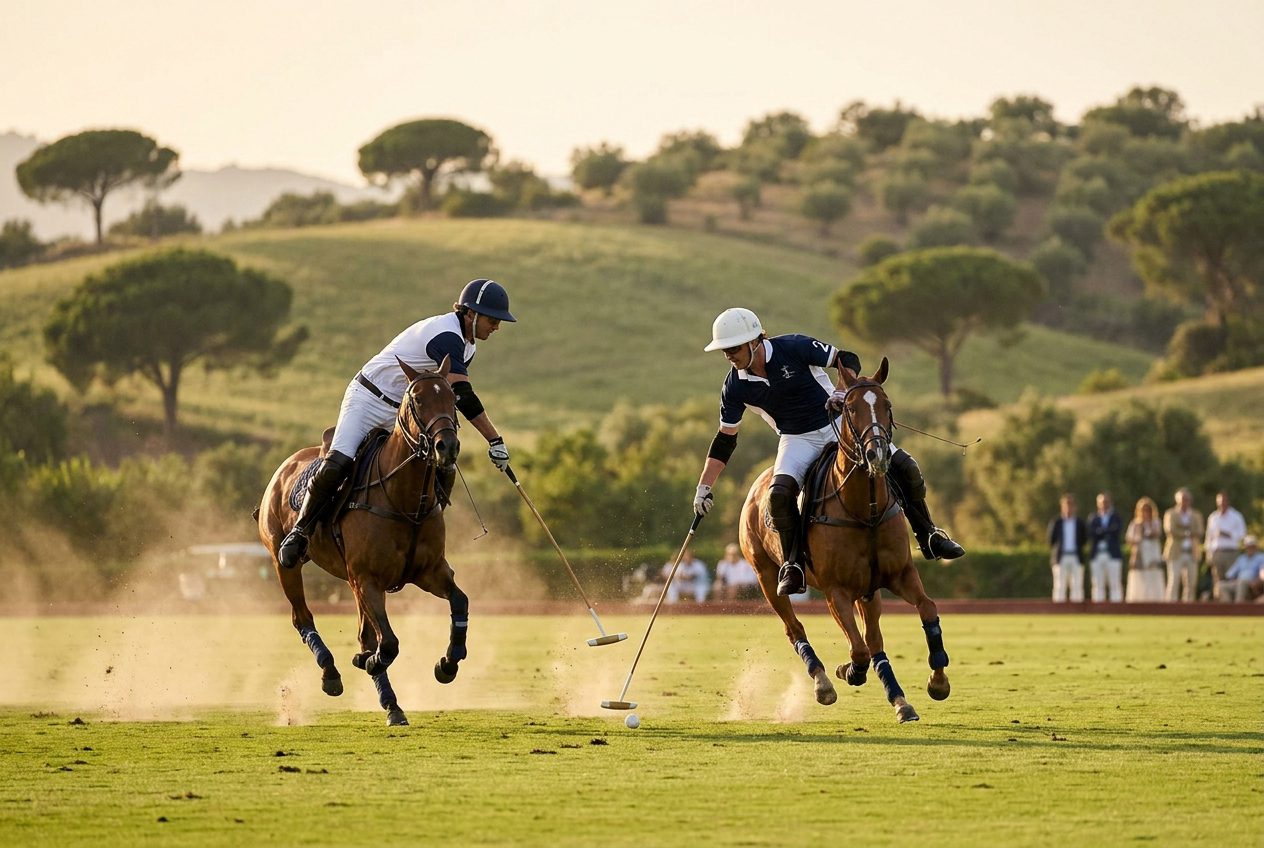
Polo
- Sotogrande — one of Europe's leading polo destinations, thirty minutes west of Marbella
- August the International Polo Tournament turns the summer into a season of its own
- World-class teams and patrons arrive each year from Argentina, the Gulf and across Europe
- Year-round equestrian culture: liveries, riding schools and Andalusian horse tradition inland
Half an hour down the coast, Sotogrande has been quietly building one of the great polo cultures of Europe for over half a century. Every August its international tournament gathers the world's leading teams, and the sidelines become a social season in themselves — long lunches, familiar faces, and a level of horsemanship that rewards even a first-time spectator.
Beyond the tournament weeks, the equestrian thread runs deep in Andalusia: the region bred the horse that carries its name, and stables, liveries and riding schools fill the valleys behind the coast. For families, riding is one of the easiest doors into local life.
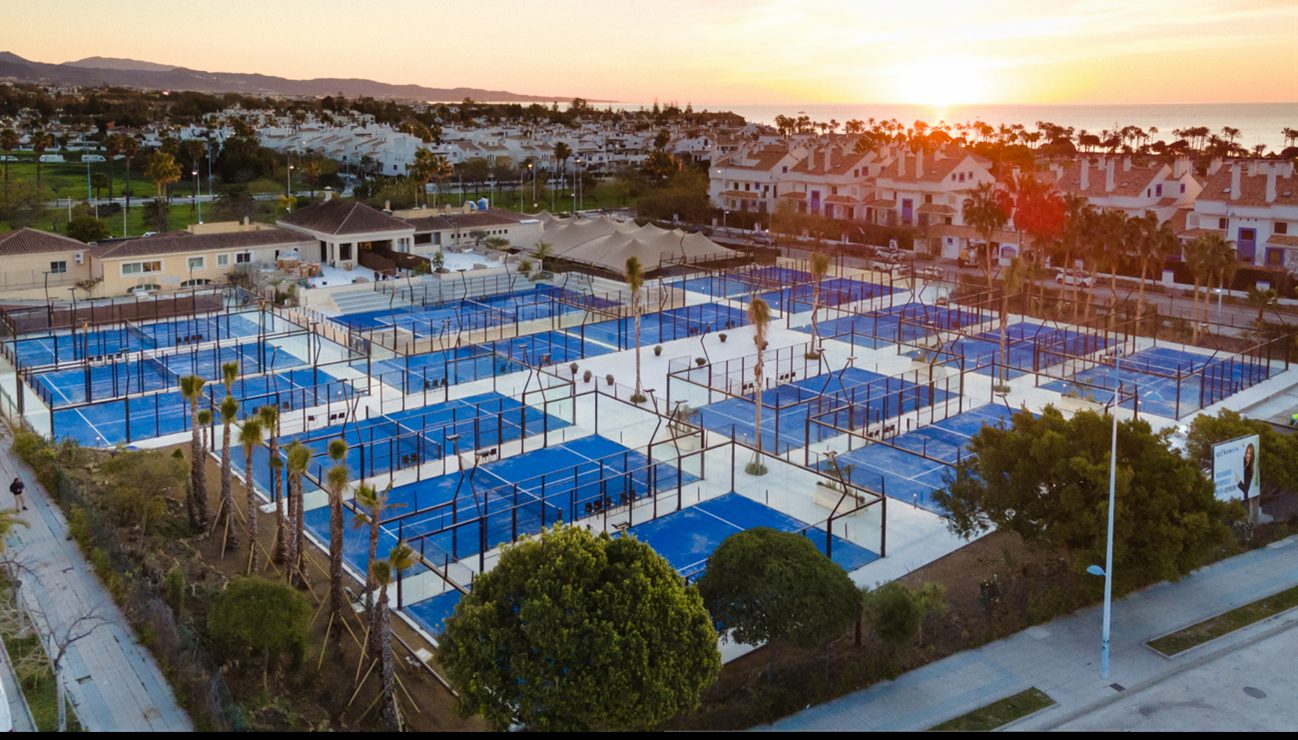
Padel
- 1974 padel's European story began in Marbella, at the Marbella Club's first courts
- No. 1 among Spain's fastest-growing sports — and the coast is its spiritual home
- Everywhere courts at clubs, hotels and urbanisations across the entire coast
- 90 min the length of the average match — and of half the coast's friendships
Padel is the coast's great equaliser. Invented in Acapulco and brought to Europe through Marbella in the 1970s, it has grown into Spain's social game of choice: easier to pick up than tennis, doubles by design, and played at every level from casual evening rounds to serious club leagues.
For newcomers it is the fastest route into a social circle we know. A standing Tuesday game does more for settling into the coast than any welcome guide — courts are everywhere, partners are easy to find, and the post-match terrace is where half the coast's plans are made.
A day on the coast
Move the sun through a resident's day — not the brochure version, the real one.
The mountain, before the world wakes
Hikers start up La Concha in cool air; paddleboards slide out onto a flat, silver sea. The coast belongs to early risers for one perfect hour.
School run, with orange trees
The drive to one of the coast's forty-plus international schools passes bougainvillea and beach. Coffee afterwards on a terrace is not a treat — it is Tuesday.
Work, with the door open
Video calls from a terrace office, fibre at full speed. Remote professionals, founders and family offices run global schedules on Central European Time.
Lunch is an institution
Grilled fish at a chiringuito, a market salad in San Pedro, or a client lunch in Puerto Banús. Nobody eats at their desk. Nobody apologises for it.
Nine holes or the sea
The afternoon divides the coast into golfers and swimmers. In the Golf Valley, tee times run late; on the beaches, the light turns to honey.
Paseo hour
The promenades fill with families, runners and dogs. Andalusia's oldest ritual — the evening walk — is alive and entirely unhurried.
Dinner starts when it starts
Tables outside, conversation long. From old-town tapas to Marbella's Michelin rooms, the evening is the coast's true main course.
The quiet coast
Marinas glitter, hills go silent, and the sea does what it has always done. Tomorrow will be sunny. It almost always is.
The working coast
The part most lifestyle guides skip: the Costa del Sol has quietly become one of southern Europe's most connected places to run a life and a business. Málaga's technology park hosts hundreds of companies, Google chose the city for a cybersecurity engineering centre, and Vodafone placed a European R&D hub here.
For our clients this matters in practical terms — an international career no longer has to be traded for the coast. Increasingly, it moves here. And when the conversation turns from lifestyle to numbers, our property ROI calculator is where most clients start.
165+ direct destinations
Málaga airport connects the coast non-stop to more than 40 countries — most European capitals in under three hours.
45 minutes door to gate
Marbella to the airport by motorway or direct coach — a commute many capital-city residents would envy.
A genuine tech ecosystem
Málaga TechPark, Google's cybersecurity centre and Vodafone's R&D hub anchor a fast-growing international talent pool.
Healthcare that reassures
Modern private hospitals and multilingual clinics across the coast — one of the practical reasons families commit long-term.
Four seasons, gently graded
Winter
Dec — Feb · ~17°C daysGolf in shirtsleeves, empty beaches for long walks, and Europe's mildest winter light. The coast at its most local.
Spring
Mar — May · Blossom seasonOrange blossom in the air, ferias in the white villages, terraces reopening one by one. Many say this is the coast at its best.
Summer
Jun — Aug · Full tempoBeach clubs, open-air concerts, late dinners and later nights. The social season, in full Mediterranean voice.
Autumn
Sep — Nov · The soft landingWarm seas, thinner crowds, golden evenings. Residents' favourite secret: September here outshines most countries' July.
What we tell clients privately
Twelve years on this coast has taught us that trust is built on the things other agencies leave out. Three of them, in the open.
August is loud
Peak season brings traffic on the A-7, busy beaches and booked-out restaurants. It lasts about six weeks — and residents plan around it the way Londoners plan around rain.
Our advice: choose an area for its September, not its August. We will tell you honestly which is which.
Not every "sea view" is one
Listings language on this coast can be generous. Orientation, elevation and future construction lines matter more than the photograph taken from the one right corner of the terrace.
Our advice: we walk every property before you do, and we say what we saw — including what the camera avoided.
Paperwork moves at Andalusian pace
NIE numbers, licences and utilities take patience. Spain rewards those who prepare early and penalises improvisation — mildly, but persistently.
Our advice: start the administrative track the day you decide, not the day you complete. We sequence it for you — the buying guide shows the full timeline.
Live it before you buy it
Tell us how you imagine your life on the coast — mornings, schools, golf, quiet — and we will shape a private shortlist of areas and homes around it. Discreet, unhurried, and built on twelve years of local knowledge.
Speak with our teamMarbella & the Coast
The lifestyle, on the map
Tap a category, then a place — the map will fly to it.